
When it comes to the “hands-free liberation” revolution of household smart appliances, washing machines are undoubtedly an indispensable milestone. Back in the 1980s and 1990s, washing machines were still a “luxury item,” but today they have become a standard fixture in every household, completely changing the tedious mode of hand-washing clothes. Now, another smart device targeting “scalp care”—intelligent hair washers—is rising along a similar path, promising to replicate the popularization legend of washing machines and bring “hair washing freedom” to more families.
To determine whether intelligent hair washers can gain widespread popularity, we first need to understand the logic behind the popularization of washing machines: solving core pain points + adapting to life scenarios + continuous technological iteration. In the past, hand-washing clothes was not only time-consuming and labor-intensive but also prone to damaging fabrics, especially for large items, which was a real “physical task.” Washing machines accurately addressed the pain points of “low efficiency and high labor intensity” through advantages such as automated washing and care, water and electricity saving. With technological upgrades—from twin-tub to front-loading, from mechanical control to smart connectivity—they gradually adapted to the needs of different families, ultimately achieving nationwide popularity.
Intelligent hair washers perfectly align with this logic. Today, people also face many “troubles” when washing their hair: office workers are exhausted after working from dawn to dusk, and hair washing with massage can relax their physical and mental state; the elderly often suffer from back pain when bending over to wash their hair; people with long hair struggle with tangles and deep cleaning… These pain points are exactly where intelligent hair washers focus their efforts.
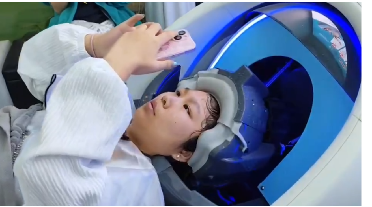
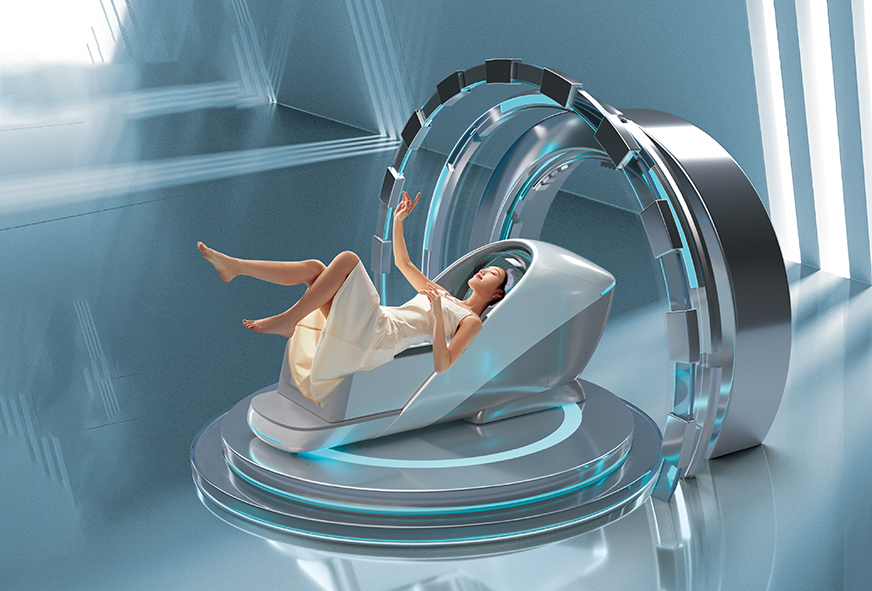
Currently, mainstream intelligent hair washers have achieved multi-dimensional technological breakthroughs. In terms of core functions, they adopt a “human-like flexible brush head” design combined with 360° rotating massage technology. This not only simulates the kneading intensity of professional hairstylists to deeply clean scalp oil and dirt but also avoids scalp scratches from fingernails. Water temperature and pressure can be precisely adjusted via APP to adapt to the scalp sensitivity of different groups. Some models also have a built-in “hair care mode” that automatically mixes shampoo and conditioner, customizing washing and care plans for different hair types such as dry or oily hair. More thoughtfully, some wall-mounted models save space, while floor-standing models come with a drying function—no need for additional blow-drying after washing, directly solving the full-process demand of “washing + drying.”
In terms of application scenarios, the coverage of intelligent hair washers is constantly expanding. In addition to ordinary families, nursing homes have become an important application scenario—staff only need to assist the elderly to the device and start it with one click to complete washing and care, greatly reducing the caregiving burden. Hair salons have also begun to introduce intelligent hair washers, reducing the workload of assistants manually washing hair and allowing hairstylists to focus more on cutting and styling. Even the hotel industry is piloting them, providing guests with “self-service high-end hair washing experiences” to enhance service competitiveness. The implementation of these scenarios, just like the early days when washing machines gradually entered families from factory canteens and laundromats, is laying the foundation for nationwide popularity.
Of course, for intelligent hair washers to replicate the popularization path of washing machines, two issues need to be addressed. First, user awareness—many people still hold the inherent impression that “manual hair washing is more convenient.” It is necessary to let more people experience its convenience through experience stores, short video reviews, and other methods. Second, product iteration—such as further reducing the size of the machine, lowering noise, and adding a children’s mode to adapt to more family scenarios.
Looking back at the popularization history of washing machines, it only took two to three decades to go from “no one uses them” to “can’t live without them.” Today’s intelligent hair washers are standing at a new starting point of the “hands-free liberation” revolution. With increasingly mature technology and more affordable prices, it may not be long before we view intelligent hair washers the way we do now—thinking “there’s always something missing without an intelligent hair washer at home.” After all, from laundry liberation to hair washing freedom, it is essentially people’s pursuit of a “more efficient and comfortable life,” and this pursuit will always be the core driving force behind the popularization of home appliances.